DDT Levels
Dynamic level calculations for key price zones
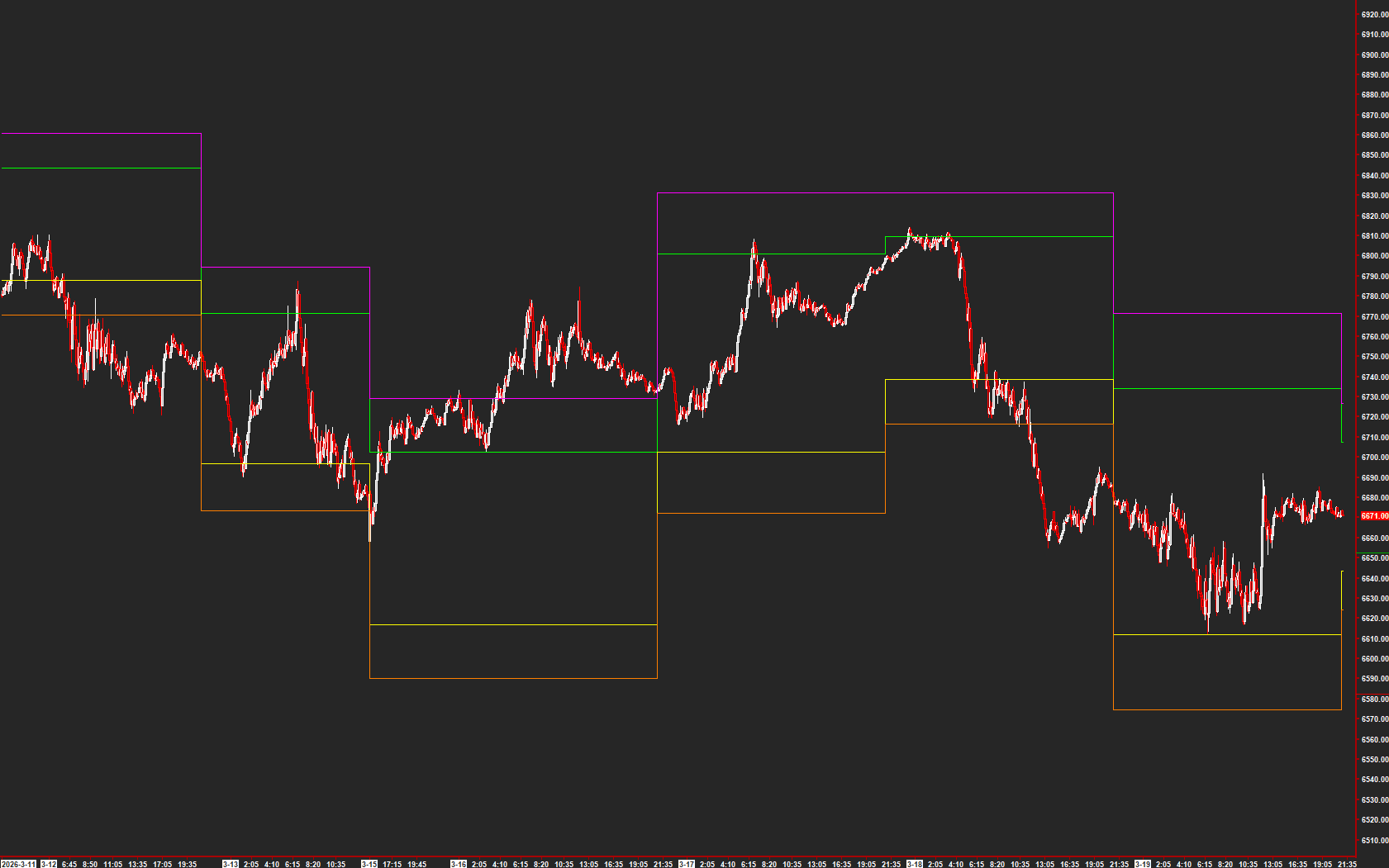
Calculates and displays dynamic distribution levels (Daily Distribution Top & Bottom) based on the prior day's high and low. Designed for use on a daily chart — overlay the resulting levels onto any intraday chart for key support and resistance reference points.
The Concept
DDT Levels calculates dynamic distribution zones from the prior day's range and displays them as reference levels for the current session. These zones represent statistically derived areas where price may find support or resistance based on the previous day's trading activity. Apply the study to a daily chart and overlay the levels onto intraday charts.
How to Read It
Four stair-step levels are displayed — two upper resistance and two lower support zones.
- DMX-A and DMX-B (upper levels) represent resistance zones derived from the prior day's range
- DMN-A and DMN-B (lower levels) represent support zones derived from the prior day's range
- Price reaching DMX levels may encounter selling pressure or slow down
- Price reaching DMN levels may find buying interest or bounce
Practical Tips
Apply this study to a daily chart, then use Sierra Chart's Chart Overlay feature to display the levels on your intraday chart. The levels update automatically each day based on the prior session. Combine with AMT Balance and VWAP levels for a comprehensive structural framework. When DDT levels converge with other key levels, the zone becomes especially significant.
Requirements
- Should be applied to a daily chart, then overlaid onto intraday charts
Subgraphs
| No. | Subgraph Name | Function & Comments |
|---|---|---|
| 1 | DMX - A | Default: Stair Step. Upper distribution level A — an upper resistance zone derived from the prior day's range. |
| 2 | DMX - B | Default: Stair Step. Upper distribution level B — a secondary upper resistance zone. |
| 3 | DMN - A | Default: Stair Step. Lower distribution level A — a lower support zone derived from the prior day's range. |
| 4 | DMN - B | Default: Stair Step. Lower distribution level B — a secondary lower support zone. |
Default: Stair Step. Upper distribution level A — an upper resistance zone derived from the prior day's range.
Default: Stair Step. Upper distribution level B — a secondary upper resistance zone.
Default: Stair Step. Lower distribution level A — a lower support zone derived from the prior day's range.
Default: Stair Step. Lower distribution level B — a secondary lower support zone.
Get Access to Every Study
All studies are included with the Gold License — proprietary Sierra Chart tools, Discord community access, and the full AMT framework.
Get the Gold License — $125/mo