
TRADINGVIEW · Study the opening hour
AMT IB Extreme Order
for TradingView.
See the first-hour high and low, which final extreme formed first, and the developing or confirmed directional classification.
See the published script for current access information. Platform subscriptions and data requirements are separate.
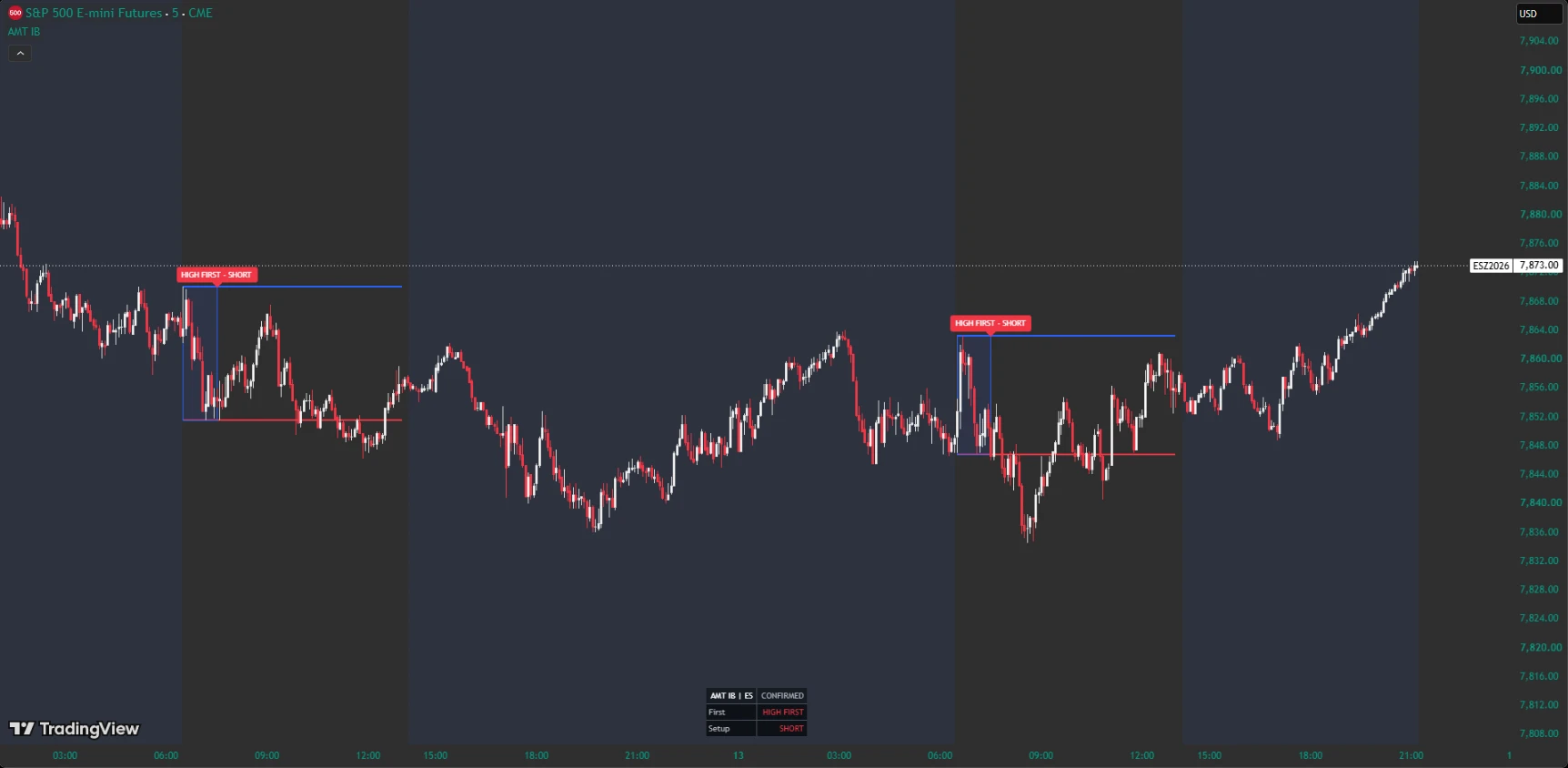
Which final extreme came first?
The Initial Balance is the first regular-session hour’s range. LOW FIRST assigns a long bias; HIGH FIRST assigns a short bias. If both final extremes were first reached on the same chart bar, the order is unresolved and there is no setup. New extremes update their recorded bars; equal-price retests retain the original bar.
Developing is not confirmed
During the opening hour the levels and classification can change. The optional developing label uses a question mark. Confirmation occurs on the first regular-session bar starting at or after the hour ends. It finalizes extreme order; it does not confirm a breakout.
Sessions and chart requirements
New York time governs all windows. ES, NQ, and RTY use 9:30–10:30 AM for IB and 9:30 AM–4 PM for RTH. CL uses 9–10 AM for IB and 9 AM–2:30 PM for RTH. Micros are supported. Use standard intraday candles and include a bar starting exactly at the session open. A one-minute chart gives finer order resolution. Fixed weekday windows do not include holiday or early-close calendars.
What the display does and does not measure
Lines, a first-hour box, labels, and the status table show the range and classification. This version does not score later breakouts, calculate historical success rates, plot extension targets, or offer custom alert conditions. It does not model entries, stops, or profitability. Larger bars, missing data, and bars crossing the IB boundary can affect validity or classification.